Language
  EN
EN RU
RU ES
ES DE
DE EL
EL IT
IT JA
JA KO
KO PT
PT ID
ID SR
SR UK
UK VI
VI TH
TH TR
TR MS
MS BE
BE AR
AREuro II Mechanical Fuel Injection Pump Testing Guide: Inline & Rotary Pump Calibration on P-Type and VE-Type Test Benches
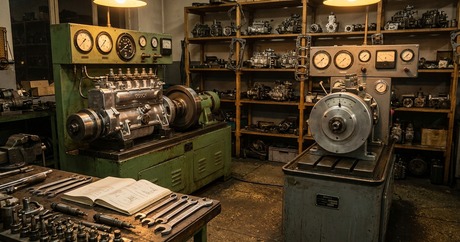
Euro II Mechanical Fuel Injection Pump Testing Guide: Inline & Rotary Pump Calibration on P-Type and VE-Type Test Benches
Mechanical fuel injection pumps are still the workhorse of Euro II diesel engines — powering trucks, construction machinery, agricultural tractors and marine gensets across Russia, Latin America, Southeast Asia and the Middle East. Unlike common rail injectors that rely on electronic control and high-pressure oil pulses, mechanical pumps deliver fuel through pure plunger-and-barrel physics, and that is exactly why a dedicated mechanical pump test bench matters. This guide walks through the inline vs. rotary pump families you will actually see on the shop floor, the failure patterns that drive rebuild work, and the bench setups that match each budget tier.
1. What Counts as a Mechanical Pump
In the Euro II world, mechanical fuel injection pumps split into three structural families, and the test bench you need depends on which one walks through your door.
Inline (P-Type) pumps — Bosch P7100 / P8000, Stanadyne DB4 / DB2, and most heavy-duty diesel truck applications. Each cylinder has its own plunger-and-barrel element driven directly by the camshaft. Calibration means measuring plunger stroke, fuel delivery per stroke and inter-cylinder equalization.
Rotary (Distributor) pumps — Bosch VE4 / VE6, Lucas DPA / DPS, Zexel VRZ / VRD, plus Stanadyne rotary variants. A single high-speed plunger distributes fuel to all cylinders through a rotor head, so calibration revolves around advance angle, distribution equalization and internal transfer pressure.
Single-element pumps — Bosch VP37 / VP44 and the V3 / V4 / V5 family. These sit between mechanical and electronic — a single plunger supplies one rail or one cylinder, often paired with an ECU for advance timing. A bench that covers P-Type rotary plus a V-series adapter handles the lot.
For shops focused on Euro II trucks and loaders, a properly configured Euro II pump test bench covers the first two families (inline + rotary) on one machine, which is the realistic 80% case.
2. Inline vs Rotary: Where Calibration Differs
The two families share the same goal (deliver the right fuel quantity at the right advance angle), but the test points are different. The table below is what your tech actually checks on the bench.
| Test Point | Inline P-Type | Rotary VE / DPA / VRZ |
|---|---|---|
| Delivery per stroke | Per-cylinder, equalization required across 4 / 6 / 8 / 12 elements | Single element, equalization done at rotor head ports |
| Advance angle | Static only (fixed by plunger helix) | Dynamic — varies with rpm, requires strobe + electronic advance sensor |
| Transfer pressure | Not applicable | Internal transfer pressure (single-digit bar range, varies by pump family) must be verified |
| Max test speed | ~1500 rpm (cam speed) | ~3500 rpm (rotor speed, much higher) |
| Common failure | Plunger wear → low delivery | Advance timing drift → black smoke + power loss |
If your shop sees mostly inline P-Type pumps from Cummins and Caterpillar engines, a P-Type-focused bench is enough. As soon as Lucas DPA or Bosch VE rotary jobs appear weekly, you need a bench that covers both transfer pressure testing and dynamic advance angle measurement.
3. Common Failures on Euro II Mechanical Pumps
Two failure modes drive most rebuild quotes. Recognizing them by symptom saves diagnostic time.
Failure 1 — Plunger wear on inline pumps. Symptom: hard starting when cold, low power under load, exhaust smoke only at high rpm. On the bench, you will see delivery per stroke drop below spec (typically 60–65 mm³/stroke for P7100 6-cylinder at full load) and uneven delivery between cylinders — element #3 might deliver 58 mm³ while element #5 delivers 52 mm³. Plunger-and-barrel replacement is the rebuild, but you only confirm that diagnosis on a calibrated bench.
Failure 2 — Advance angle drift on rotary pumps. Symptom: black smoke at idle, poor cold-start response, fuel consumption creeping up. On the bench, transfer pressure is in spec but the dynamic advance curve is shifted — at 1500 rpm the pump might advance 6° BTDC instead of the spec 8° BTDC. Worn advance piston seals or a fatigued flyweight assembly are the usual suspects. A bench with electronic advance angle display (not just a static timing light) catches this in minutes.
4. Test Bench Setup by Budget
Match the bench to the workload, not the other way around. The configurations below are proven on real shop floors.
Entry (12PSB series) — 12-cylinder inline pump coverage with a heavy-duty drive. Best for shops that handle Stanadyne DB4 / DB2 and Bosch P7100 / P8000 day in, day out. 12PSB covers the P-Type family at a sensible price.
Mid-tier (12PSD or MINI12PSB-A) — adds 8-cylinder coverage with touch-screen control, or a compact 8-cylinder P-Type unit for smaller workshops. 12PSD suits shops wanting digital calibration logging; MINI12PSB-A fits tight floor space.
Pro (BC3000 / BC4000 / BCS619) — industrial-grade 12-cylinder P-Type coverage with PC control, CRT or industrial display options, and rotary pump readiness with the right adapter. BC3000 adds PC data logging, BC4000 suits traditional CRT-display workshops, and BCS619 is a 12-cylinder workhorse for high-volume rebuild shops. A quick WhatsApp message with your typical pump mix gets you a tailored config.
5. Inline Pump Calibration Procedure (3 Steps)
For Bosch P7100 / P8000 and Stanadyne DB4 / DB2 inline pumps, the bench workflow is the same three-step routine. Skipping the equalization check is the single most common cause of a "rebuilt" pump that still misfires under load.
Bleed air and prime — fill the pump with calibration oil, manually rotate the drive to purge air from each element. Air in the system causes erratic delivery readings; a bench with a hand-priming lever saves ten minutes per pump.
Measure plunger stroke and delivery — at the spec rpm (typically 750 rpm for delivery check, 1500 rpm for rated load), measure fuel delivery per stroke per cylinder using the bench's graduated burettes. Compare against the OEM spec — for P7100 inline-6 the typical full-load target is 60–65 mm³ per stroke per element, with ≤3% inter-cylinder deviation.
Equalize delivery — adjust the barrel-sleeve position or the delivery collar on each element until all cylinders deliver within spec. Recheck at idle, partial load and full load; a pump that passes only at full load will fail in the truck.
6. Rotary Pump Calibration Procedure (3 Steps)
For Bosch VE4 / VE6, Lucas DPA / DPS and Zexel VRZ / VRD rotary pumps, the workflow shifts toward timing and transfer pressure. The bench must support dynamic advance measurement.
Verify transfer pressure — at idle rpm, measure the internal transfer pressure at the rotor head test port. Spec varies by pump family, typically in the single-digit bar range. Low transfer pressure points to a worn transfer piston or scored rotor head — both rebuild triggers.
Set static advance angle — at the spec static timing rpm (varies by pump; typically 600–800 rpm), use the bench's timing light or electronic advance sensor to set the static advance to OEM spec. Mark the timing window before disassembly so reassembly is straightforward.
Map dynamic advance curve — sweep the pump from idle to max rpm in 250-rpm steps, recording advance angle at each step. Compare against the OEM curve; deviations >2° at any rpm point signal a fatigued advance piston spring or leaking seals. Adjustable advance spring kits bring a worn pump back into spec without full disassembly.
7. Frequently Asked Questions
Q1: Can a P-Type bench like 12PSB test Bosch VE rotary pumps?
A standard 12PSB covers inline P-Type only. To test VE rotary pumps you need either a rotary-capable bench (BCS619 or BC3000 with rotary adapter) or a dedicated VE test stand. Rotary testing requires dynamic advance measurement at high rotor speeds (up to 3500 rpm), which P-Type-only drives do not support.
Q2: How many cylinders can a 12PSB bench test simultaneously on inline pumps?
12PSB and BC4000-series benches test up to 12 cylinders in one run — full V12 inline pumps (such as certain Detroit Diesel and Caterpillar configurations) come off the bench fully calibrated in a single pass, with all 12 delivery readings logged.
Q3: What is the real difference between Euro II and Euro III mechanical pumps?
Euro II pumps are purely mechanical — fixed advance, no electronic intervention. Euro III kept the same mechanical pump but added electronic control of advance timing (via a solenoid on the advance piston), which means the bench must support electronic advance input. Most Euro III pumps can be tested as mechanical on a Euro II-capable bench, but the electronic advance needs a separate test routine.
About Beacon Machines
Beacon Machines has been building diesel fuel injection test equipment since the early 2000s, with installations across Europe, the Americas, the Middle East and Southeast Asia. Our 12PSB / 12PSD / MINI12PSB / BCS619 / BC3000 / BC4000 series covers the full Euro II mechanical pump spectrum — from single-shop inline specialists to high-volume rotary-capable rebuild centers. For configuration advice or a tailored quote based on the pump mix you actually see, reach out on WhatsApp and our engineering team will spec the right bench for your floor.
Related products
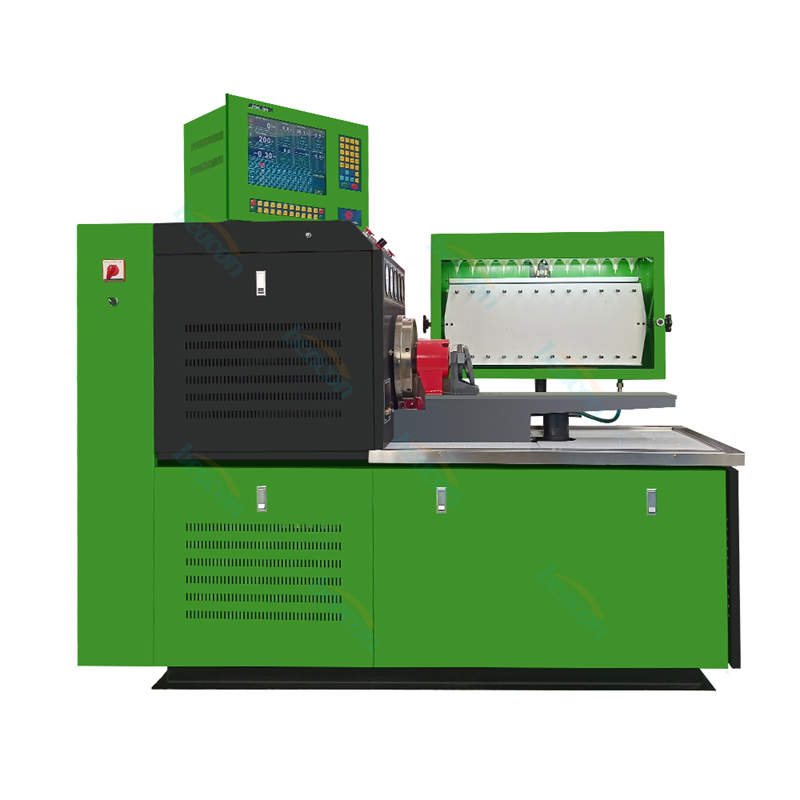
BCS619 Diesel Fuel Injection Pump Test Bench for 12-Cylinder Pumps
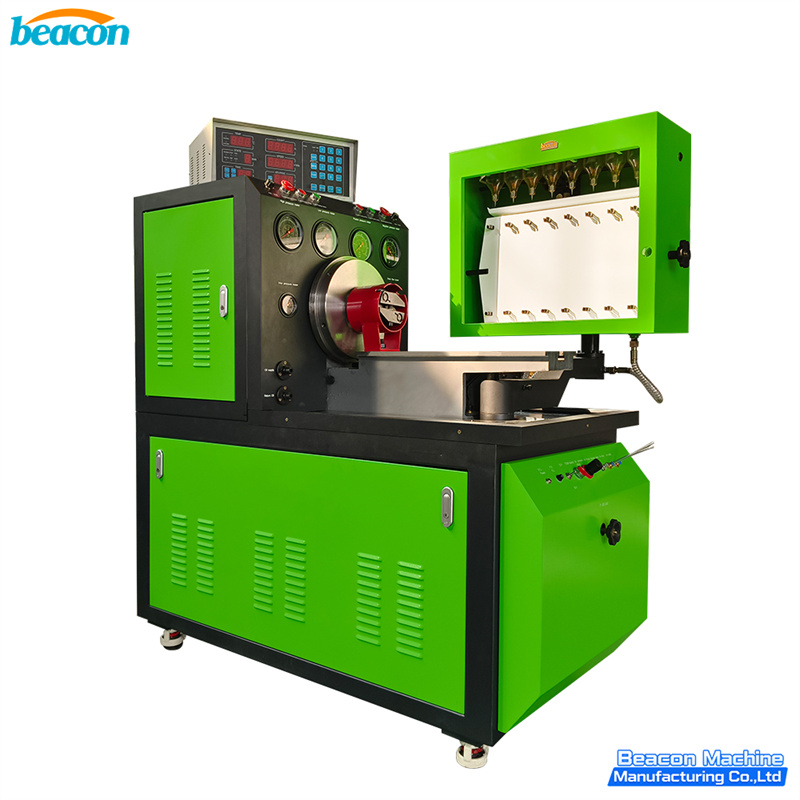
MINI 12PSB-X Series Compact Diesel Fuel Injection Pump Test Bench
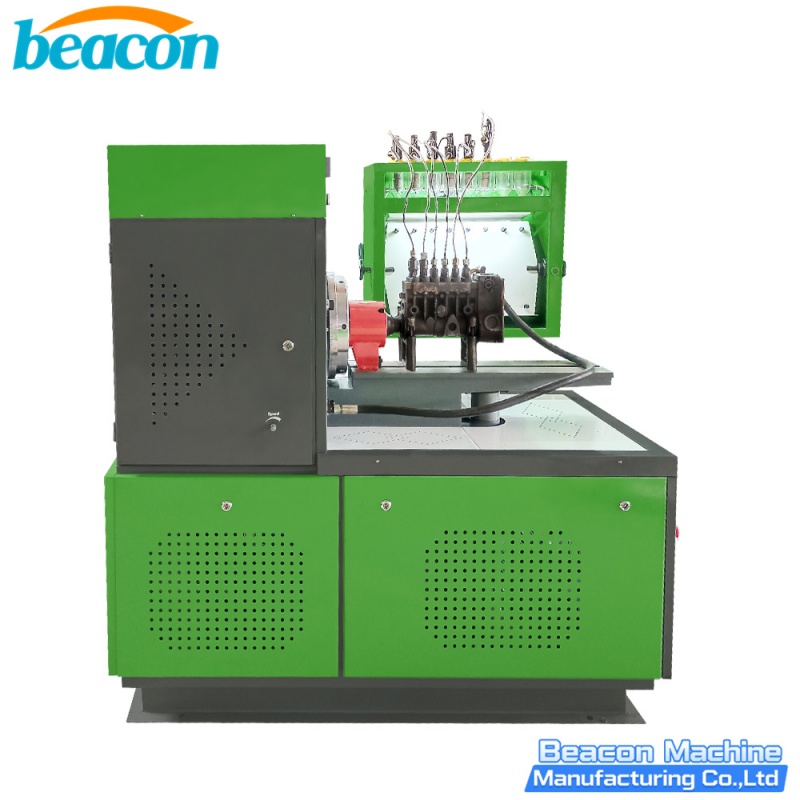
MINI12PSB-H 8-Cylinder Euro II Mechanical Diesel Fuel Injection Pump Test Bench
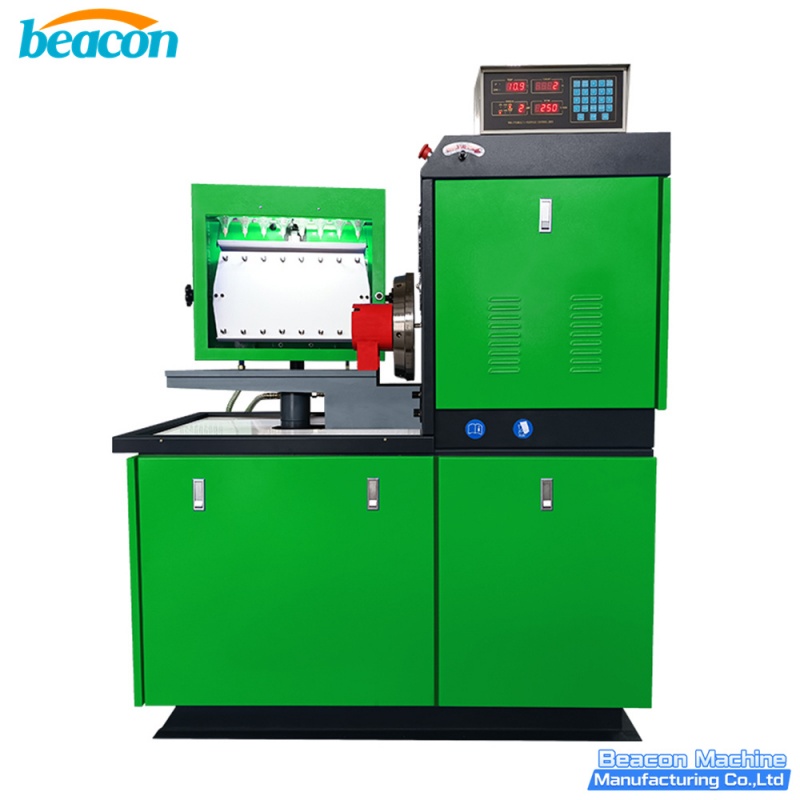
MINI12PSB-A 8-Cylinder Euro II Mechanical Diesel Fuel Injection Pump Test Bench
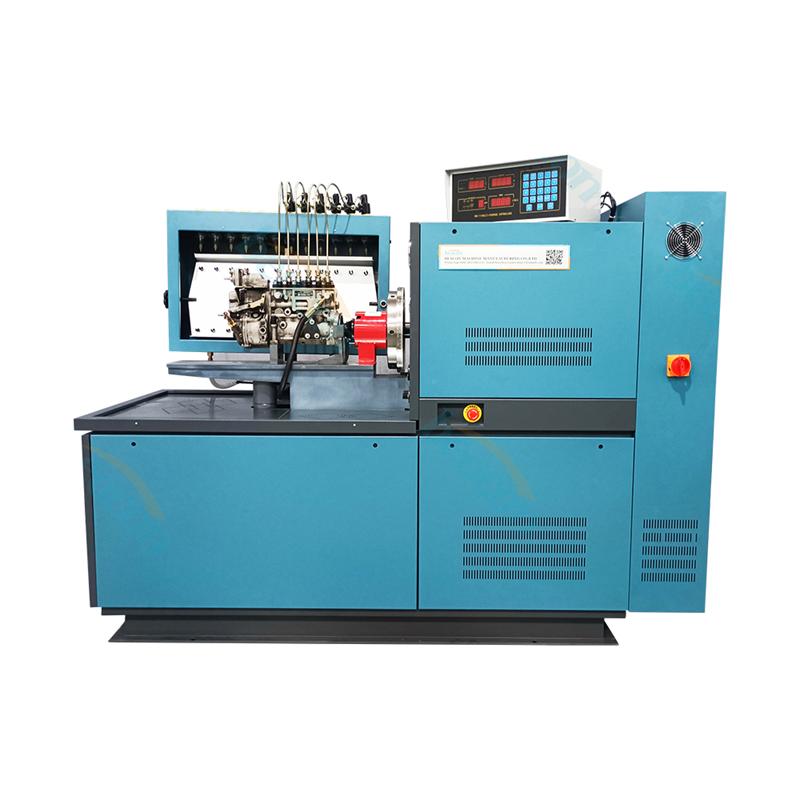
12PSB-X Series Compact Diesel Fuel Injection Pump Test Bench
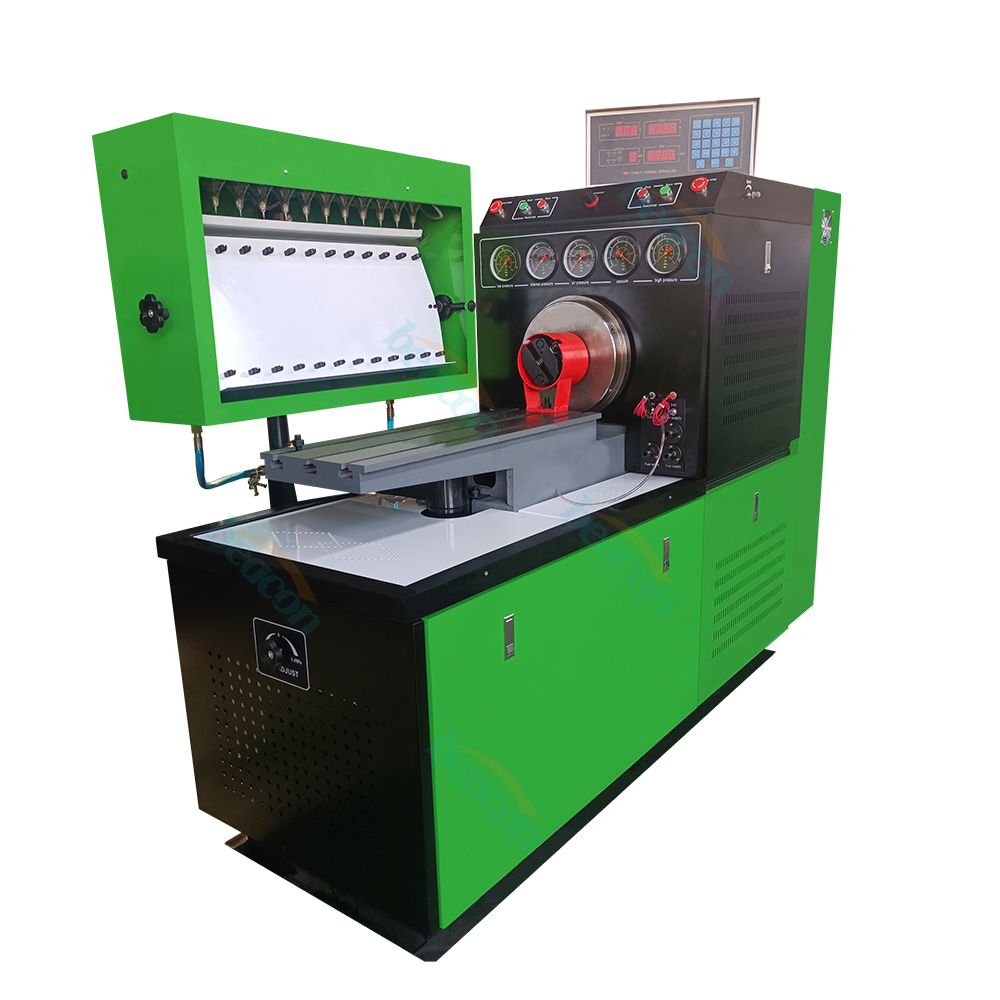
12PSB-H Euro II Diesel Fuel Injection Pump Test Bench for Mechanical Pumps
 Beacon Machine Manufacturing Co.,ltd.
 about beacon
PRODUCTS
contact us
TEL: 0086-18253885138
WhatsApp:+86-18253885138
Email: Janechen@beacon-machine.com
Add: High Tech Industry Zone of East Tai an city,Shandong Province,China