Language
  EN
EN RU
RU ES
ES DE
DE EL
EL IT
IT JA
JA KO
KO PT
PT ID
ID SR
SR UK
UK VI
VI TH
TH TR
TR MS
MS BE
BE AR
ARBosch CP4 Pump Failure: Why It Happens and How Test Benches Catch It Early
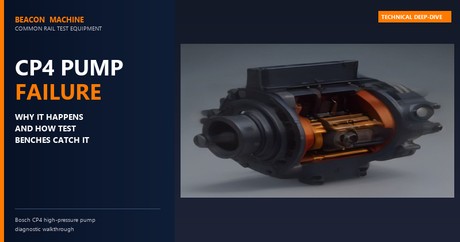
Bosch CP4 Pump Failure: Why It Happens and How Test Benches Catch It Early
Why a single high-pressure pump failure can take down an entire fuel system — and what workshop owners can do to spot it before the damage spreads.
A pattern every diesel workshop sees eventually
If you're seeing CP4-equipped engines on the bench for the first time, it helps to understand what the pump is doing in the system before you start chasing symptoms. Our earlier guide on high-pressure pumps in common rail test benches walks through the role each pump family plays in the rail pressure loop. This article assumes that background and focuses specifically on the CP4's failure modes.
A truck rolls into your bay running rough, low on power, sometimes with a check-engine light that points toward fuel rail pressure. You hook up a scanner. The rail pressure reads unstable, or it's lower than spec at idle. Within an hour of digging, you find metal flakes in the fuel filter, scoring on the injector pistons, and a pump that no longer holds pressure.
This isn't a CP3 failure. It's the CP4 — and the failure pattern is different enough that treating it like an older CP3 problem can cost your customer a complete fuel system rebuild.
If your shop services 2011-and-later Duramax, Power Stroke, or any of the common rail diesels that adopted the CP4.2 platform, you've probably seen at least one of these. Understanding why the CP4 fails — not just that it fails — is what separates a $1,500 pump job from a $9,000 fuel system rebuild.
What makes the CP4 different from the CP3
Bosch designed the CP4 as a higher-efficiency, higher-pressure successor to the long-running CP3.3. It runs at up to 2,600 bar (roughly 36,000+ PSI) in most on-highway applications, and it's smaller, lighter, and quieter than its predecessor. That's the upside.
The downside is in how it handles fuel lubrication. The CP3 uses the diesel fuel itself as a hydraulic fluid with reasonable margins. The CP4 runs with much tighter internal clearances and at significantly higher pressure — which means it depends on fuel with specific lubricity characteristics to keep its cam, pistons, and bushing surfaces from metal-to-metal contact.
When those lubricity conditions break down — water in the fuel, low-sulfur fuel without proper additive package, debris from a marginal filter, or extended service intervals — the CP4 doesn't just wear. It sheds metal into the fuel system.
Once metal enters the loop, the high-pressure pump is now feeding its own debris into the fuel rail, the injectors, and the supply lines. The damage compounds every time the key is turned.
The three failure paths, ranked by what your shop will actually see
1. Lubricity failure (most common)
The CP4's internal components depend on fuel film strength. Water contamination, even in small amounts, drops that film strength past the threshold where the cam-to-piston contact begins to score. Most CP4 failures diagnosed as "pump just wore out" actually started here.
What the test bench catches early: A common rail test bench running the pump through its full pressure ramp — not just at idle spec — will show rising internal leakage before the failure becomes catastrophic. If the bench holds a programmed pressure and the pump can't maintain it without external compensation, you're seeing the early signature of this wear pattern.
2. Suction-side restriction (second most common)
A marginal fuel filter, a weak lift pump, or a partially blocked pickup can put the CP4 into cavitation. Cavitation does to a CP4 what it does to any positive-displacement pump: pitting on the cam surfaces, then debris, then the failure cascade above.
What the test bench catches early: Bench-side measurement of the pump's inlet-side response under load is the cleanest indicator. If a pump that previously held spec now shows erratic delivery on the bench under simulated partial-restriction conditions, the problem is upstream of the pump — not the pump itself.
3. Sudden seizure (rarest, most expensive)
When a CP4 seizes without warning, it's almost always because path 1 or 2 was already in progress and an external event (low fuel, cold start with marginal fuel, contaminated batch) pushed it over. The bench can't prevent this — but it can tell you, retroactively, whether the pump you just replaced had measurable drift before failure.
Why this matters for shop owners and equipment buyers
If your shop services CP4-equipped engines — and in 2026 that means most late-model diesel pickups, plus a growing share of medium-duty applications — you need to be able to answer two questions:
Did the pump fail on its own, or did something upstream kill it?
Are the injectors and rail still clean enough to put back into service, or did the debris get them too?
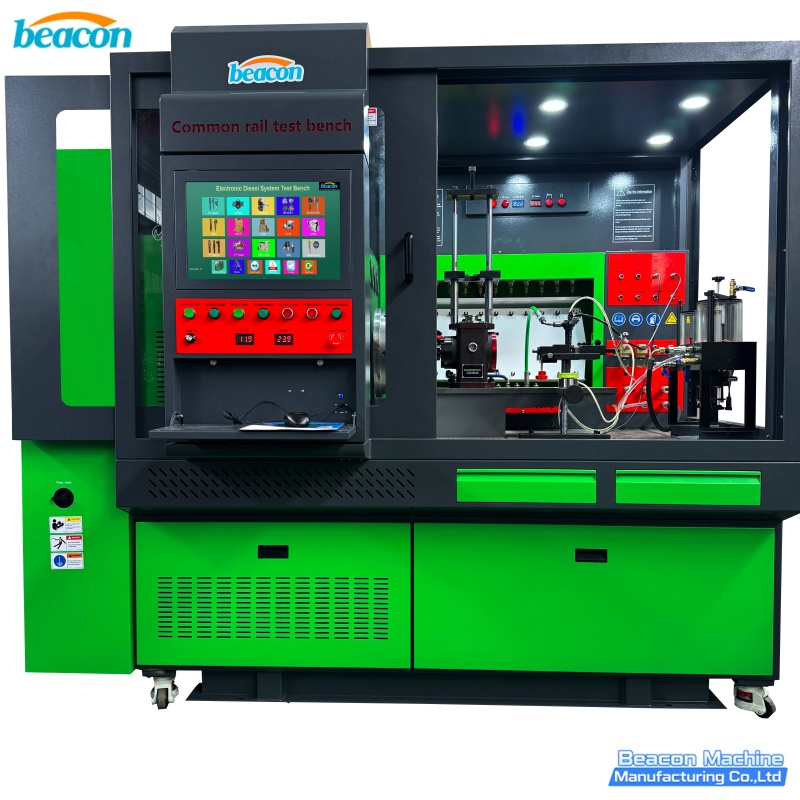
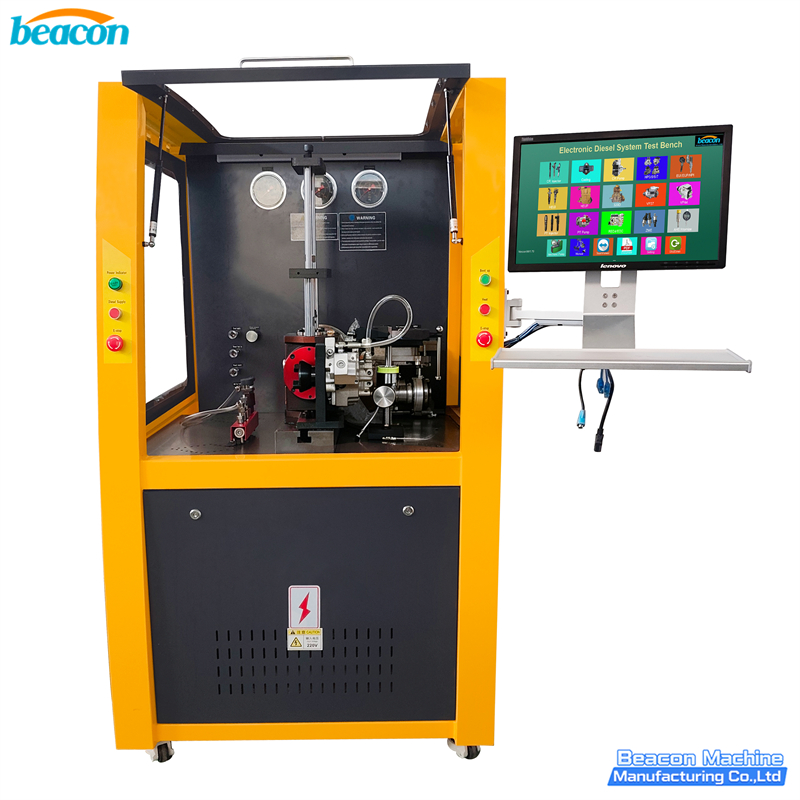
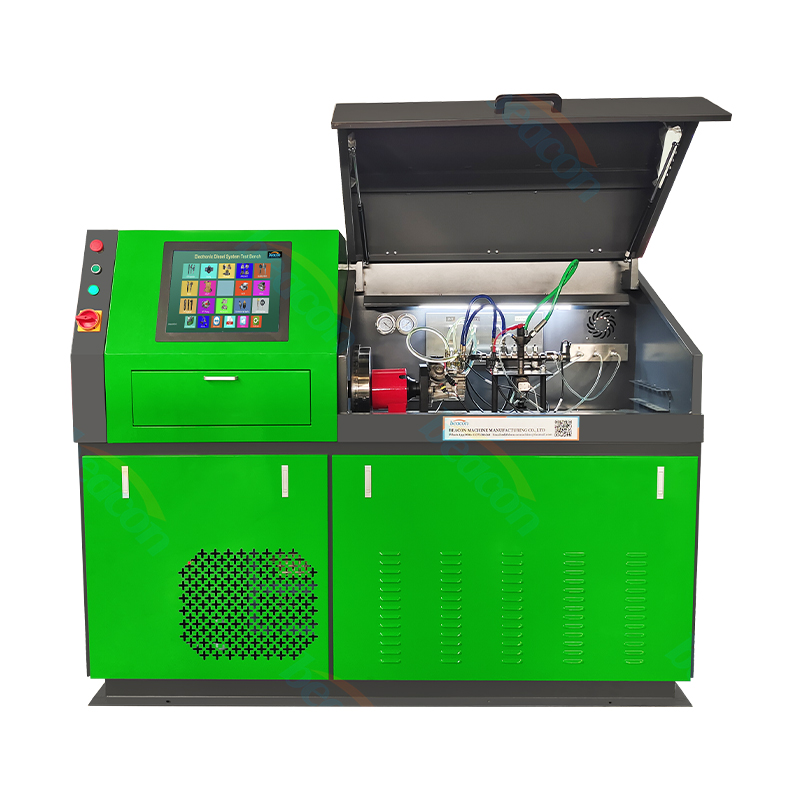
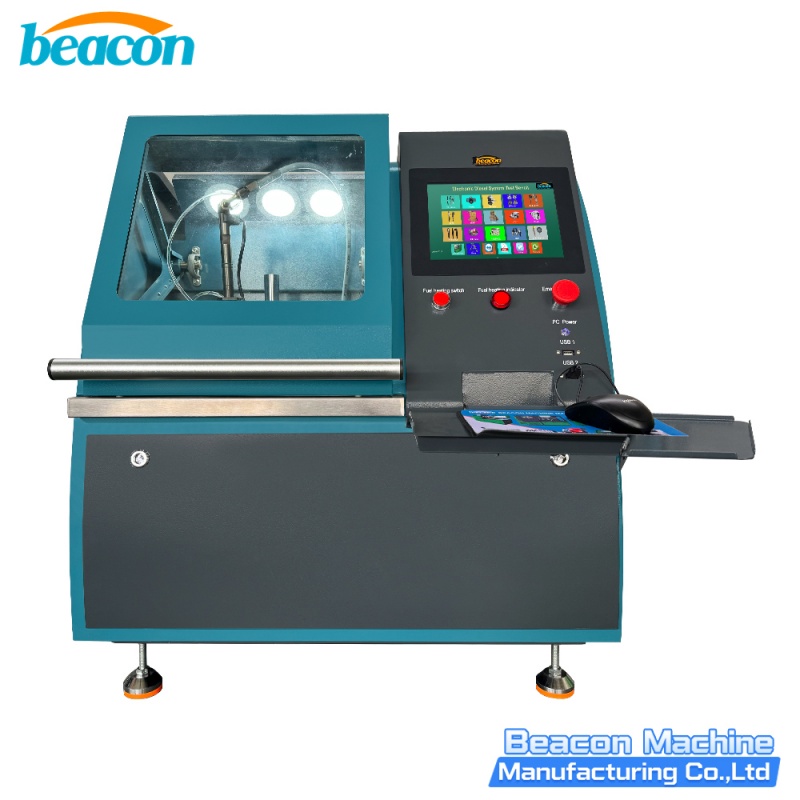
Both questions require a common rail test bench capable of running the injectors and the pump individually under controlled conditions. A scan tool tells you what's wrong. A bench tells you whether the parts you've got are still good.
This is also where the difference between a generic common rail tester and one designed for CP4-class pressure ranges shows up. CP3-era equipment that maxes out at 1,800 bar isn't going to fully exercise a CP4 in its operating envelope. If your bench can't reach at least 2,200 bar reliably with stable flow, you're leaving diagnostic information on the table.
What a CP4-aware test bench protocol looks like
The protocol isn't complicated, but it does require a bench that holds spec across the full pressure curve. In practical terms:
Pump ramp test: sweep from idle pressure to full operating pressure, holding each step for 30-60 seconds, watching for leakage rate increase.
Pump response test: step from low demand to high demand in<100 ms, watch overshoot and settling time. A CP4 with marginal cam surfaces will show longer settling times.
Injector back-leak measurement: any injector returning >X ml/min at spec pressure is suspect. On a CP4-equipped engine, even a slightly worn injector compounds the pump's workload.
Combined rail test: pressure stability under simulated load dumps. A healthy CP4 holds rail pressure within tight tolerance across multiple cycles.
Most of this can be done in under 30 minutes per cylinder once your technician knows the protocol. The bench software should walk them through it.
A quick decision tree for the bay
When the truck rolls in with CP4 symptoms, the practical order of operations looks like this:
Pull fuel filter and inspect for glitter. This is free, takes two minutes, and answers a third of the diagnostic questions. If the filter has metallic residue, you're already looking at a debris event, not a "pump just died" case.
Check fuel sample from the tank. Water bottoms, biological growth, or visible particulates tells you the pump was operating in a degraded environment. This protects you from blaming the pump when the root cause is upstream.
Connect the bench to the removed pump before any rebuild decision. A pump that tests marginal on the bench is a pump your customer should replace, not rebuild — because rebuilt CP4s that came out of a debris event are the pumps that come back to you in six months.
Bench-test every injector individually before reinstalling. Injectors that survive a CP4 debris event often pass a quick seat-leak test but fail under load. The 30-minute protocol above catches this. A visual inspection doesn't.
The shops that handle CP4 work profitably run this sequence as a standard procedure, not a judgment call. Customers understand a structured diagnostic and accept the price tag. They don't accept "we replaced the pump and the truck came back with the same problem two months later."
The distributor angle
For distributors supplying equipment to CP4-active markets, the same logic applies at a regional level. Workshops buying their first or second test bench are often buying it specifically because they've been bitten by a CP4 debris event that turned a $1,500 pump job into a $9,000 fuel system claim against them.
A bench that can run the full CP4 protocol — pump ramp, pump step, injector back-leak, combined rail stability — is a more defensible sale than one that only handles injector-side testing. It's also a sale that holds up against the workshop's first CP4 case, which is usually the moment the bench either proves its value or doesn't.
The protocol walkthrough above is the kind of conversation worth having with the bench supplier before purchase. Ask specifically how their bench handles the pump-side tests, not just the injector tests. The answer tells you whether their equipment was designed for current-generation common rail or updated from an older platform.
What to look for if you're buying a new test bench for CP4 work
Three things matter more than the spec sheet:
Maximum pressure rating with continuous-duty confirmation. "Up to 2,500 bar" on a brochure is not the same as "holds 2,200 bar for 8 hours without thermal drift" in your bay.
Pump-side diagnostics, not just injector-side. A lot of entry-level benches test injectors well but treat the pump as a generic flow source. Make sure the bench supports ramp and step protocols on the pump itself.
Protocol documentation that matches what the OEM service info shows. If the bench protocol doesn't line up with what Bosch, Duramax, or Power Stroke service manuals describe, your diagnostic conclusions won't transfer back to the OEM world — and your customer will end up second-guessing you.
Wrapping up
The Bosch CP4 is a reliable pump when fuel quality is maintained and service intervals are respected. The failures it does have follow patterns that a properly equipped shop can catch before they cascade — and that's where the test bench earns its keep.
If your shop is seeing CP4-equipped engines on a regular basis and your current bench can't fully exercise the pump across its operating envelope, that's a conversation worth having with your equipment supplier. The engineering teams that design these benches can usually walk through what their protocol looks like on a CP4 specifically, and whether their pressure range actually fits the way you want to test.
Beacon Machine has been building common rail test equipment for workshops and distributors worldwide since 2010. Our engineering team works directly with shops on protocol setup for specific engine platforms — reach out through our contact page if you want to discuss what your bench should be doing for the engines in your bay.
Related products
 Beacon Machine Manufacturing Co.,ltd.
 about beacon
PRODUCTS
contact us
TEL: 0086-18253885138
WhatsApp:+86-18253885138
Email: Janechen@beacon-machine.com
Add: High Tech Industry Zone of East Tai an city,Shandong Province,China